

The On The Face Of It blog series has been written to give property professionals an overview of the curtain wall façade, differences in system types, common defects and assessment considerations.
Blog #6 in this series will provide a high-level overview of the desktop study that should be undertaken prior to an inspection.
Gathering Information
The desktop study is an essential part of the assessment process. A thorough desktop study puts you in the best position for the inspection because you will already know what defects and issues you need to look for.
That being said, after over a decade of working mostly on high-rises, I am aware that tracking down information can be like hunting for unicorns – even on new and relatively young buildings. However, these are the typical wish-list items I generally request (particularly on due diligence work):
Occupant Reports/Complaints: Whether it’s leaks, drafts, vibrations or noise, the feedback from occupants can be very informative.
Maintenance & Inspection Records: Cleaning records, cleaning methodology, access methodology, routine inspection records, repair or renewal records. These all give an indication of whether a facade has been cared for appropriately.
Glass Breakage and Replacement Records: These can be very telling – are breakages from accidental damage or is there a wider issue. Knowing the frequency of breakages, and how the glass was replaced, will also help with future durability and maintenance considerations.
As-built Plans, Specifications and Facade Shop-Drawings: For some reason, these seem to be the rarest of all the documents, despite their importance. Having this information isn’t just beneficial for the inspection, it is essential for planning for future repairs and maintenance that will inevitably be required.
Document Reviews
With due diligence inspections in particular, there is often limited time available for the inspection. So, you need to be selective when determining which areas of a facade you need to look at in more detail. Carefully reviewing the documents you acquire should help you understand not just the construction, but what areas you may want to target during your inspection. For example, if there are leaks, you may want to look at these to understand the cause and to assess the standard of repairs (see this blog).
Shop Drawing Reviews
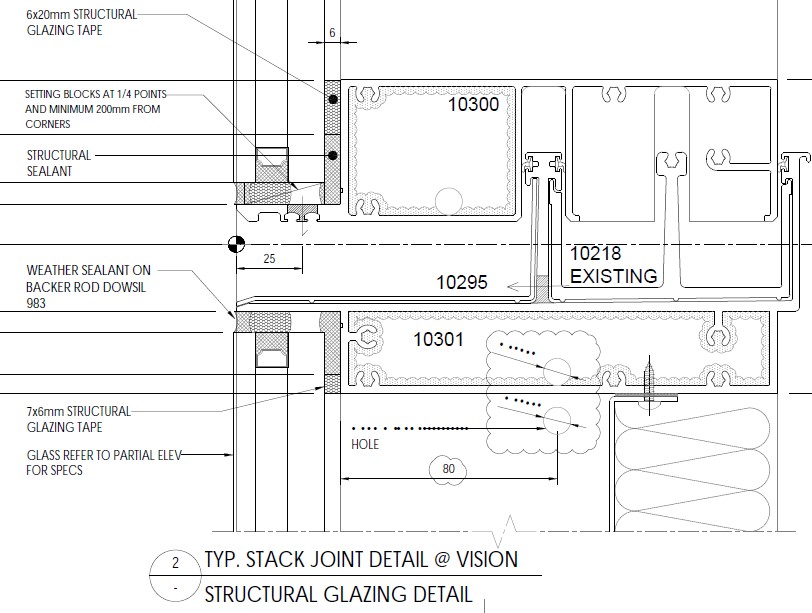
For me the most informative document for these assessments is the facade shop drawings. Some of the typical things I am looking for are:
Frames
- What coating has been applied to the aluminium? How should it be cleaned?
- Are there any components that clip in place?
- Are there splice details above mullion sections and how are these detailed?
- Where are fixings located, and are there any material compatibility issues that need to be considered?
Drainage
- How and where does the system drain?
- What size should weepholes, drainage slots etc. be?
- Where could water go if a section of drainage becomes blocked?
Glazing
- What is the glass type? What other components form the glazed unit – interlayer in laminated glass, spacer in IGUs etc?
- Are there any comments on acceptable surface defects at the time of manufacture – surface blemishes, edge bubbles? This can sometimes be found in the specification.
Glazing Setting Blocks
- What are they made of? Are the any material compatibility concerns with the blocks and IGUs (insulated glazing units)? Is the material durable enough not to shrink or deform?
- What size should the blocks be to prevent moisture wicking to the edge of the glass units?
- Where should the blocks be located to prevent blocking weepholes?
Glazing Seals and Gaskets
- Where are gaskets and seals located in the assembly (not all are visible during the inspection)?
- What type of material has been used? Different materials have different durability characteristics?
- Is sealant intended to be a weatherseal or weatherseal and structural?
- Are gasket corners vulcanised?
I’ve inspected a lot of high-rise facades, and if I had a dollar for every time I’ve been able to track down facade shop drawings, I’m not even sure I would have 10 bucks. For some reason, people just don’t hold onto facade information, which is a great shame.
Ultimately, the more information you can gather, the better your chances will be of truly developing an understanding of the facade. So, be sure to ask the owners and facilities managers for as much information as possible – you may just find that unicorn document after all.
By Victoria Richardson

 Copper Seed